


Introduction
Planning a new industrial facility or expanding an existing operation involves more than construction, equipment, and production planning. Businesses also need to understand how the proposed project may affect the surrounding environment.
An environmental impact assessment Oman process helps identify potential environmental impacts associated with a proposed project and provides a basis for planning appropriate mitigation and monitoring measures.
For facility owners, understanding the environmental assessment process early can make project planning more organized. It can also help identify environmental risks before construction or major operational changes begin.
The exact assessment requirements can vary depending on the project, location, activities, scale, potential impacts, and applicable environmental requirements.
What Is an Environmental Impact Assessment?
An Environmental Impact Assessment, commonly called an EIA, is a structured process used to identify and evaluate the potential environmental effects of a proposed project.
An assessment may consider areas such as:
- Air quality
- Water resources
- Soil and land
- Waste generation
- Industrial emissions
- Noise
- Biodiversity
- Traffic and transportation
- Resource consumption
- Potential environmental risks
The purpose is not simply to identify problems. An EIA can also help project owners plan measures to prevent, reduce, control, or monitor potential environmental impacts.
Why Is an Environmental Impact Assessment Important?
An EIA can provide useful information before a project moves into construction or full operation.
1. Identifies Environmental Risks Early
Potential environmental issues can be easier to address during the planning stage than after a facility has been constructed.
An assessment can help identify possible impacts associated with equipment, processes, materials, emissions, waste, and resource use.
2. Supports Environmental Planning
The findings of an assessment can be used to develop appropriate environmental controls and monitoring activities.
3. Helps Project Owners Make Informed Decisions
Facility owners can use environmental information when considering project design, equipment selection, operational processes, and pollution-control measures.
4. Supports Environmental Approval Processes
Depending on the project and applicable requirements, an environmental assessment may form part of the documentation required for environmental approval.
Project owners should confirm the specific requirements applicable to their project before starting the assessment.
When Might an EIA Be Required?
Not every project has the same environmental assessment requirements.
The need for an assessment can depend on factors such as:
- Type of project
- Industrial activity
- Project size
- Project location
- Production capacity
- Potential environmental impacts
- Emission sources
- Waste generation
- Water requirements
- Applicable environmental requirements
Some projects may have relatively limited environmental impacts, while larger or higher-risk projects may require more detailed environmental studies.
Facility owners should determine the applicable requirements during the early planning stage.
Main Components of an Environmental Impact Assessment
An environmental impact assessment Oman process can include several areas of investigation.
The exact scope depends on the project.
Project Description
The assessment generally begins by describing the proposed project.
This can include:
- Project location
- Site area
- Proposed facilities
- Production activities
- Equipment
- Raw materials
- Fuel requirements
- Water consumption
- Expected production capacity
A clear project description helps establish the basis for the environmental assessment.
Existing Environmental Conditions
Before assessing potential impacts, it is important to understand the existing environmental conditions around the project.
Depending on the project, baseline studies may consider:
- Existing air quality
- Water quality
- Soil conditions
- Noise levels
- Ecology
- Existing land use
- Nearby sensitive areas
Baseline information provides a reference point for understanding potential changes associated with the project.
Air Quality and Industrial Emissions
Air emissions can be an important part of an environmental assessment for industrial projects.
Potential sources may include:
- Boilers
- Generators
- Furnaces
- Process equipment
- Exhaust stacks
- Dust-producing activities
- Storage operations
- Material handling
The assessment may consider which pollutants could be generated and what controls may be required.
Where applicable, environmental testing Oman services can provide measurements that support environmental assessments and monitoring programs.
Water and Wastewater
Industrial projects may use water for production, cleaning, cooling, domestic purposes, or other activities.
An environmental assessment may consider:
- Water consumption
- Water sources
- Wastewater generation
- Wastewater characteristics
- Treatment systems
- Discharge arrangements
- Potential impacts on water resources
Understanding water requirements early can help facility owners plan appropriate management systems.
Waste Management
Industrial activities can generate different types of waste.
These may include:
- General waste
- Industrial waste
- Process waste
- Packaging waste
- Used materials
- Sludge
- Other process-specific waste
An environmental assessment can consider how waste will be generated, stored, transported, treated, recycled, or disposed of.
The appropriate management method depends on the type and characteristics of the waste.
Noise and Other Environmental Impacts
Industrial equipment can generate noise during construction and operation.
Potential sources can include:
- Generators
- Compressors
- Pumps
- Heavy machinery
- Production equipment
- Vehicles
An environmental assessment may consider noise levels and the potential impact on surrounding areas where relevant.
Other environmental factors may also need to be considered depending on the location and project type.
Environmental Impact Assessment Process
Although the exact process varies by project, facility owners can generally think of an EIA as a series of stages.
Step 1: Understand the Project
Collect information about the proposed facility, processes, equipment, capacity, location, and materials.
Step 2: Identify Environmental Aspects
Determine how the project may interact with air, water, soil, waste, noise, and other environmental factors.
Step 3: Establish Baseline Conditions
Collect relevant environmental information about the project area.
Step 4: Assess Potential Impacts
Identify potential environmental impacts associated with construction and operation.
Step 5: Develop Mitigation Measures
Determine practical measures to prevent or reduce identified impacts.
Step 6: Develop Monitoring Requirements
Establish suitable environmental monitoring activities to track performance during operation.
Step 7: Prepare Documentation
Compile the required technical information and supporting documents.
Step 8: Follow Applicable Approval Procedures
Submit the required documentation through the applicable environmental approval process.
Project owners should confirm current procedures and documentation requirements with the relevant authorities before submission.
Environmental Impact Assessment vs Environmental Monitoring
These two activities are connected but serve different purposes.
Environmental Impact Assessment
An EIA mainly looks at potential environmental impacts associated with a proposed project.
It is particularly important during project planning and approval.
Environmental Monitoring
Environmental monitoring focuses on measuring environmental conditions during project construction and/or operation.
Monitoring can include:
- Air quality
- Industrial emissions
- Water quality
- Wastewater
- Noise
- Other relevant environmental parameters
An EIA can therefore help establish what needs to be monitored, while monitoring provides ongoing information about actual environmental conditions.
How Facility Owners Can Prepare for an EIA
Good preparation can make the assessment process more organized.
Collect Project Information Early
Maintain technical information about:
- Site location
- Site layout
- Equipment
- Production processes
- Raw materials
- Fuel
- Water usage
- Waste
- Emission sources
Identify Environmental Concerns
Consider potential environmental issues before the assessment begins.
Maintain Accurate Data
Environmental studies depend on reliable information.
Incorrect project details can affect the quality of the assessment.
Understand Applicable Requirements
Facility owners should identify the environmental requirements that apply to their project.
Requirements can differ depending on project type and location.
Plan Monitoring Activities
Think about how environmental performance will be monitored after the project becomes operational.
Common Environmental Assessment Challenges
Facility owners can face several challenges during environmental assessment.
Incomplete Project Information
If project details are still changing, it may be difficult to accurately assess environmental impacts.
Late Environmental Planning
Starting environmental planning after major project decisions have already been made can limit available options.
Poor Baseline Information
Reliable baseline data is important when evaluating potential changes.
Ignoring Operational Changes
Future production increases or process modifications should be considered where relevant.
Inadequate Monitoring Planning
An environmental assessment should not be viewed only as an approval document. Monitoring and environmental management should continue during project operation where required.
Role of Environmental Testing in an EIA
Environmental testing can provide measurable information that supports an environmental assessment.
Depending on the project, testing may help assess:
- Air quality
- Industrial emissions
- Water quality
- Wastewater
- Soil
- Noise
- Other environmental parameters
Reliable test data can strengthen the technical basis of environmental planning.
For industrial projects, testing can also provide baseline information that can later be compared with operational monitoring results.
Environmental Impact Assessment and Industrial Projects in Oman
Oman has a diverse industrial and development sector, including manufacturing, energy, infrastructure, construction, logistics, and other activities.
Each project can have different environmental characteristics.
For this reason, environmental impact assessment Oman requirements should be evaluated according to the individual project rather than assuming that one assessment approach applies to every facility.
Facility owners should consider:
- Project type
- Location
- Scale
- Production activities
- Emission sources
- Water use
- Waste generation
- Potential environmental impacts
- Applicable environmental requirements
- Required monitoring
Current approval procedures, classifications, and documentation should be verified before project submission.
Environmental Approval and Project Planning
Environmental approval should ideally be considered during the early project-planning stage.
This allows facility owners to identify potential environmental requirements before major design and construction decisions are finalized.
Environmental planning can be coordinated with:
- Site planning
- Equipment selection
- Process design
- Waste management
- Emission controls
- Water management
- Environmental monitoring
Early planning can make it easier to incorporate environmental controls into the overall project design.
How Alifoman Can Support Environmental Testing
Alifoman can support businesses with environmental testing and monitoring activities in Oman.
Environmental testing can provide technical data that may support environmental assessments, monitoring programs, and broader environmental management activities.
Depending on the required scope, services may support areas such as:
- Air quality assessment
- Industrial emissions testing
- Environmental monitoring
- Environmental testing
- Water-related testing
- Other project-specific environmental measurements
The exact testing scope should be confirmed according to the project requirements and applicable environmental conditions.
Environmental Impact Assessment Checklist
Facility owners can use this basic checklist when preparing for an environmental assessment:
- Confirm project location
- Prepare site layout
- Document production processes
- List major equipment
- Identify raw materials
- Identify fuel requirements
- Identify emission sources
- Estimate water requirements
- Identify wastewater sources
- Identify waste streams
- Consider noise sources
- Review existing environmental conditions
- Identify potential environmental impacts
- Develop mitigation measures
- Plan environmental monitoring
- Organize technical documents
- Verify current approval requirements
Frequently Asked Questions
What is an environmental impact assessment in Oman?
An environmental impact assessment Oman is a structured environmental assessment used to identify and evaluate potential environmental impacts associated with a proposed project.
Why is an EIA important for facility owners?
An EIA can help facility owners identify environmental risks, plan mitigation measures, develop monitoring requirements, and support applicable environmental approval processes.
Is an EIA required for every industrial project?
No single requirement applies to every project. The assessment requirements can depend on the project type, size, location, activities, potential impacts, and applicable environmental requirements.
What does an environmental impact assessment include?
Depending on the project, an EIA may consider air quality, emissions, water, wastewater, waste, soil, noise, ecology, resource use, and other relevant environmental factors.
Can environmental testing support an EIA?
Yes. Environmental testing can provide baseline and technical data for areas such as air quality, emissions, water, soil, noise, and other environmental parameters where applicable.
What is the difference between an EIA and environmental monitoring?
An EIA evaluates potential environmental impacts associated with a project, while environmental monitoring measures environmental conditions during construction or operation.
When should facility owners start environmental planning?
Environmental planning should ideally begin during the early stages of project development so potential environmental requirements can be considered alongside design and construction decisions.
Does an EIA guarantee environmental approval?
An assessment provides environmental information and supporting documentation, but approval depends on the applicable requirements, project characteristics, submitted information, and the relevant approval process.
Conclusion
An environmental impact assessment Oman process gives facility owners a structured way to understand the potential environmental effects of a proposed project.
By identifying emission sources, water requirements, waste streams, noise sources, and other environmental aspects early, businesses can plan suitable mitigation and monitoring measures.
Environmental testing can also provide useful baseline and technical information for industrial projects.
For facility owners, the most important step is to consider environmental requirements early rather than treating them as a final-stage project activity. A well-planned environmental assessment can support better project design, environmental management, and long-term operational planning.
Businesses should always verify the latest Oman-specific environmental approval procedures, classifications, documentation requirements, and applicable standards before beginning or submitting an assessment.
SEO Implementation Recommendations
Primary keyword: environmental impact assessment Oman
Use naturally in:
- SEO title
- Meta description
- Introduction
- Main H2
- FAQ
- Conclusion
Secondary keywords:
- EIA Oman
- environmental assessment Oman
- environmental approval Oman
- environmental compliance Oman
- environmental testing Oman
- environmental monitoring Oman
- industrial environmental assessment
- industrial projects Oman
Suggested internal links:
- Environmental testing services
- Environmental monitoring
- Industrial emissions testing
- Air quality testing
- Environmental compliance
- Related industrial testing services in Oman
Suggested schema:
- Article Schema
- FAQ Schema
- Breadcrumb Schema
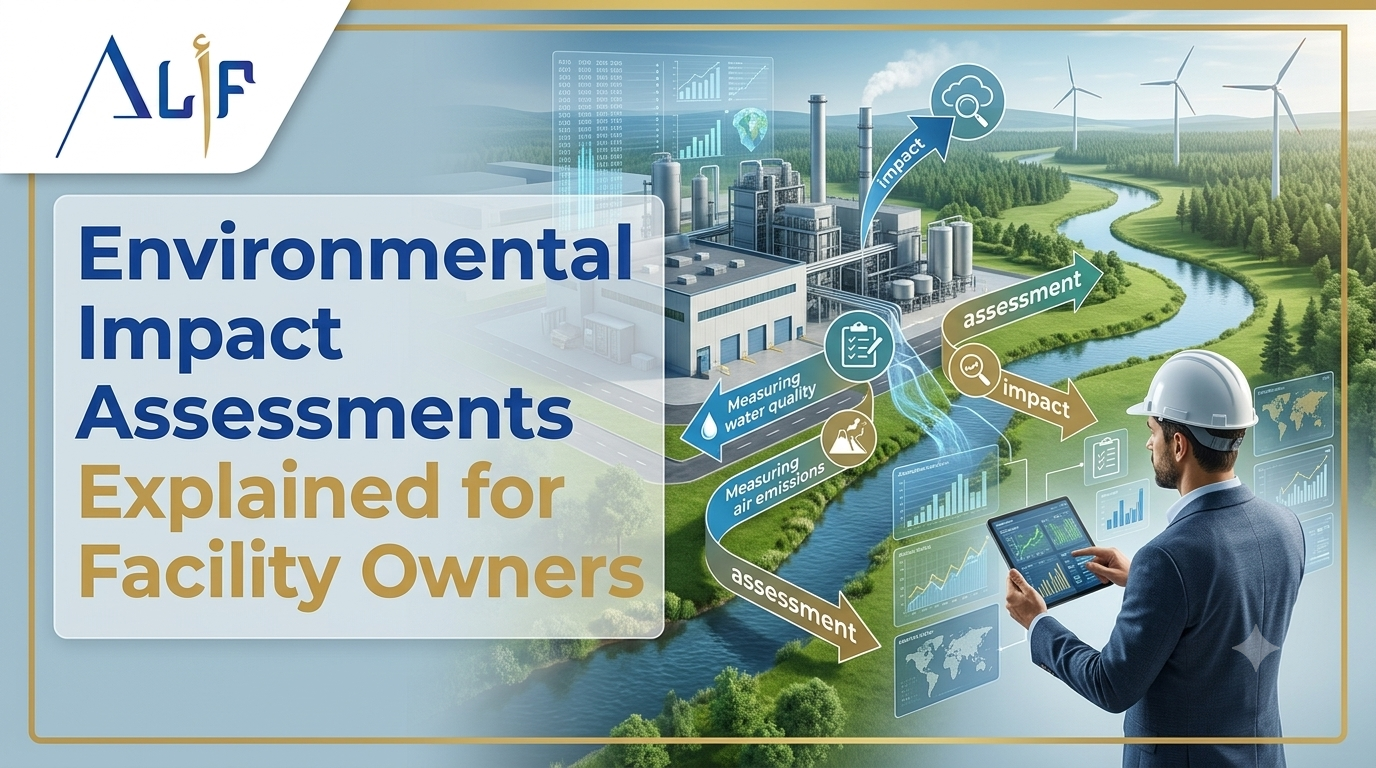
Featured image idea: Environmental assessment professional reviewing an industrial facility site plan or conducting an environmental survey at an industrial facility.
Publishing note: Oman-specific regulatory classifications, approval procedures, authority names, assessment thresholds, and documentation requirements should be checked against the latest official requirements before publication.

Leave a Reply