


Introduction
Industrial businesses need reliable environmental information to understand how their operations affect the surrounding environment.
Manufacturing facilities, power plants, oil and gas operations, processing industries, construction-related businesses, and other industrial activities may need to monitor emissions, air quality, water, wastewater, noise, and other environmental parameters.
This is where an environmental testing lab Oman can play an important role.
Environmental testing laboratories provide measurement and analysis that can help businesses understand environmental conditions, identify potential issues, maintain records, and support applicable environmental compliance activities.
Testing is not simply about producing a report. The quality of the sample, measurement, analysis, documentation, and interpretation can all affect the usefulness of the final result.
What Is an Environmental Testing Lab?
An environmental testing laboratory is a facility or technical service provider that performs testing and analysis related to environmental parameters.
Depending on the laboratory’s capabilities and scope, environmental testing may cover areas such as:
- Air quality
- Industrial emissions
- Water quality
- Wastewater
- Soil
- Noise
- Dust
- Other environmental parameters
The exact services available vary between providers.
For industrial businesses, the appropriate testing scope should be selected according to the facility’s activities, emission sources, environmental requirements, and monitoring objectives.
Why Are Environmental Testing Labs Important?
Environmental testing provides objective measurements that businesses can use for environmental management.
1. Provides Measurable Data
Visual observations alone cannot provide complete information about environmental conditions.
Testing can provide numerical results for selected environmental parameters.
2. Supports Environmental Compliance
Industrial facilities may need environmental monitoring and testing as part of applicable permits, approvals, reporting, or management requirements.
Reliable test data can support these activities.
3. Helps Identify Environmental Problems
Unexpected test results may indicate potential problems with:
- Industrial processes
- Equipment
- Pollution-control systems
- Wastewater treatment
- Emission sources
- Operating conditions
4. Supports Long-Term Monitoring
Repeated testing allows businesses to compare results over time.
This can help identify trends and changes in environmental performance.
What Services Can an Environmental Testing Lab Provide?
The exact services depend on the laboratory’s technical scope.
Industrial Emissions Testing
Industrial emissions testing measures selected pollutants released from industrial sources.
Potential parameters may include:
- Particulate matter
- NOx
- SOx
- CO
- CO₂
- VOCs
- Other process-specific pollutants
The parameters tested depend on the source and applicable requirements.
Air Quality Testing
Air quality testing can assess selected pollutants in ambient or workplace environments, depending on the purpose of the assessment.
It can help businesses understand air conditions around their facilities.
Water Quality Testing
Water testing can be used to assess selected physical, chemical, or other parameters.
Testing requirements depend on the type and intended use of the water.
Wastewater Testing
Industrial wastewater may contain substances associated with the production process.
Testing can help businesses understand wastewater characteristics and support appropriate management and treatment activities.
Soil Testing
Where applicable, soil testing can help assess selected physical and chemical characteristics of soil.
This may be relevant for environmental assessments, site investigations, or contamination-related studies.
Noise Monitoring
Noise measurements can help industrial facilities understand sound levels associated with equipment and operations.
How Does Environmental Testing Support Compliance?
Environmental compliance involves more than simply conducting a test.
Testing becomes useful when it is integrated into a wider environmental management process.
A typical approach can be:
Identify requirement → Select parameters → Conduct testing → Review results → Take action → Maintain records
Each step contributes to effective environmental management.
Step 1: Identify What Needs to Be Tested
The first step is understanding the facility’s environmental aspects.
For example, a manufacturing plant may have:
- Exhaust stacks
- Boilers
- Generators
- Wastewater
- Dust-producing processes
- Chemical storage
- Industrial waste
Each source may require a different type of monitoring.
Step 2: Select Relevant Parameters
Not every pollutant needs to be tested at every location.
The testing program should consider:
- Industrial process
- Raw materials
- Fuel
- Equipment
- Emission sources
- Previous test results
- Environmental requirements
- Permit conditions
Selecting relevant parameters helps prevent unnecessary testing while ensuring important areas are considered.
Step 3: Conduct Proper Sampling and Measurement
The quality of the final result depends partly on how measurements or samples are collected.
Depending on the test, this may involve:
- Preparing the sampling location
- Using appropriate equipment
- Following suitable procedures
- Recording operating conditions
- Maintaining sample identification
- Preventing contamination
- Transporting samples appropriately
For industrial emissions, operating conditions during testing can be particularly important.
Step 4: Laboratory Analysis
Where laboratory analysis is required, samples are analyzed for the selected parameters using appropriate methods.
The laboratory process should produce clear and traceable results that can be reviewed as part of the environmental assessment or monitoring program.
The specific analytical method depends on the parameter being tested and the applicable testing requirements.
Step 5: Review and Interpret Results
Test results should not simply be stored and forgotten.
Businesses should review results against:
- Applicable requirements
- Permit conditions
- Previous results
- Internal environmental targets
- Expected operating conditions
If results show unexpected changes, further investigation may be appropriate.
Step 6: Take Corrective Action When Required
If testing identifies an environmental issue, the business can investigate the potential cause.
Possible causes may include:
- Equipment failure
- Poor maintenance
- Process changes
- Fuel changes
- Pollution-control problems
- Wastewater treatment issues
- Unusual operating conditions
Corrective action should be based on the specific problem identified.
Role of Environmental Testing in Industrial Emissions Management
Industrial emissions can change over time.
Equipment condition, production levels, fuel quality, maintenance, and process changes can all affect emissions.
Regular emissions testing Oman can provide information about these changes.
For example, a facility may compare current emissions results with previous measurements.
If a significant change is identified, the business can investigate whether the change is related to equipment, process conditions, or another factor.
This makes environmental testing part of an ongoing improvement process rather than a one-time compliance activity.
Environmental Testing and Air Quality Monitoring
Air quality monitoring Oman and environmental testing can provide complementary information.
Industrial emissions testing focuses on emissions from specific sources, such as stacks or exhaust systems.
Ambient air monitoring, on the other hand, assesses air conditions in a surrounding area or selected monitoring location.
Both approaches can be useful depending on the facility and environmental objectives.
The appropriate monitoring program should be based on the specific project and applicable requirements.
Importance of Accurate Environmental Testing Reports
A test report should provide enough information for the results to be understood and reviewed.
Depending on the type of testing, useful information may include:
- Testing date
- Sampling location
- Tested parameters
- Measurement results
- Sampling conditions
- Relevant equipment information
- Testing method
- Laboratory analysis information
- Observations
- Supporting technical information
Clear documentation helps businesses maintain their environmental records and review historical performance.
Environmental Testing Labs and Environmental Audits
Environmental testing can also support environmental audits.
During an audit, a facility may need to demonstrate that it has:
- Conducted required monitoring
- Maintained testing records
- Reviewed environmental results
- Investigated abnormal results
- Maintained relevant equipment
- Taken corrective actions where necessary
Testing reports can provide supporting evidence for these activities.
However, testing alone does not guarantee compliance. Businesses should also manage permits, procedures, equipment, records, waste, and other applicable environmental requirements.
How Testing Labs Support Environmental Impact Assessments
Environmental testing can provide baseline information for an environmental impact assessment Oman process where applicable.
Baseline data can help establish existing environmental conditions before a project begins.
Depending on the project, this may include information related to:
- Air
- Water
- Soil
- Noise
- Other environmental parameters
Later monitoring results can potentially be compared with baseline information to understand changes associated with project activities.
Choosing an Environmental Testing Lab in Oman
When selecting an environmental testing lab Oman, businesses should consider several factors.
Relevant Technical Experience
The provider should have experience with the type of environmental testing required.
Appropriate Testing Methods
The laboratory or testing provider should use methods appropriate for the parameters being assessed.
Suitable Equipment
Testing equipment should be appropriate for the measurement and maintained according to applicable requirements.
Clear Reporting
Reports should present results and relevant technical information clearly.
Understanding of Industrial Operations
Industrial testing often requires coordination with facility operations.
A provider should understand the importance of production conditions, equipment status, and testing schedules.
Appropriate Technical Scope
Businesses should confirm that the provider can perform the specific tests required for their facility rather than selecting a provider based only on a general environmental-testing description.
Common Mistakes When Using Environmental Testing Services
Testing Without Understanding the Requirement
Businesses may request testing without first identifying what parameters are actually required.
Choosing the Cheapest Option Without Checking Scope
Price is only one consideration. Technical capability and appropriate testing methods are also important.
Poor Sampling Preparation
An unsuitable sampling location or poor preparation can affect the testing process.
Missing Operating Information
For industrial testing, operating conditions can provide important context for understanding results.
Not Reviewing Previous Results
Historical results can provide useful context for current measurements.
Treating the Report as the End of the Process
The value of testing comes from reviewing results and taking appropriate action when required.
Environmental Testing in Oman
Oman’s industrial sector includes a wide range of businesses with different environmental requirements.
The appropriate environmental testing program can vary depending on:
- Industry
- Facility size
- Location
- Production process
- Equipment
- Emission sources
- Fuel and raw materials
- Water use
- Waste generation
- Applicable environmental requirements
Therefore, businesses should develop testing programs based on their specific operations.
For environmental testing Oman, companies should also confirm current regulatory requirements, permit conditions, testing methods, and applicable standards before starting a compliance-related testing program.
How Alifoman Supports Environmental Testing
Alifoman can support industrial businesses with environmental testing and monitoring activities in Oman.
Its services can help businesses collect technical information related to environmental conditions and industrial operations.
Depending on the required scope, environmental testing activities can support:
- Industrial emissions testing
- Air quality monitoring
- Environmental monitoring
- Environmental assessments
- Environmental compliance activities
- Technical environmental reporting
The exact testing scope should be confirmed based on the facility’s requirements and applicable environmental conditions.
Environmental Testing Checklist for Industrial Facilities
Before arranging environmental testing, businesses can review the following checklist:
- Identify the reason for testing
- Identify emission and environmental sources
- Determine required parameters
- Review applicable requirements
- Check permit conditions
- Select an appropriate testing provider
- Prepare sampling locations
- Confirm equipment availability
- Record operating conditions
- Maintain previous test reports
- Review new test results
- Investigate unusual results
- Maintain testing documentation
- Track corrective actions
Frequently Asked Questions
What is an environmental testing lab?
An environmental testing lab performs testing and analysis related to environmental parameters such as air, emissions, water, wastewater, soil, noise, and other applicable measurements.
Why do industrial companies need environmental testing?
Environmental testing provides measurable information that can support environmental monitoring, reporting, assessment, and applicable compliance activities.
What can an environmental testing lab test?
Depending on its technical scope, a laboratory or testing provider may test air quality, industrial emissions, water, wastewater, soil, noise, and other environmental parameters.
How does environmental testing support compliance?
Testing provides data that businesses can use to compare environmental performance against applicable requirements, permit conditions, previous results, or internal objectives.
How often should environmental testing be conducted?
Testing frequency depends on the facility, environmental requirements, permit conditions, emission sources, previous results, and operational changes. There is no single frequency that applies to every facility.
What is the difference between emissions testing and air quality monitoring?
Emissions testing generally measures pollutants released from a specific source, while air quality monitoring assesses air conditions at a selected surrounding or ambient location.
Can environmental testing support an EIA?
Yes. Where applicable, environmental testing can provide baseline information and technical data for an environmental impact assessment.
What should businesses check before choosing a testing laboratory?
Businesses should consider technical scope, relevant experience, testing methods, equipment, reporting quality, and whether the provider can perform the specific tests required.
Conclusion
An environmental testing lab Oman can play an important role in helping industrial businesses understand and manage their environmental performance.
Testing provides measurable information about emissions, air quality, water, wastewater, soil, noise, and other environmental parameters where applicable.
However, environmental testing should not be viewed as a standalone activity. Its value comes from using reliable measurements as part of a broader environmental management process.
For industrial businesses in Oman, a structured approach can include identifying environmental sources, selecting relevant parameters, conducting appropriate testing, reviewing results, maintaining records, and taking corrective action when required.
By combining environmental testing Oman, environmental monitoring, equipment management, and proper documentation, businesses can build a more organized approach to environmental compliance and long-term environmental performance.
SEO Implementation Recommendations
Primary keyword: environmental testing lab Oman
Use naturally in:
- SEO title
- Meta description
- Introduction
- Main H2
- FAQ
- Conclusion
Secondary keywords:
- environmental testing Oman
- environmental testing services
- environmental laboratory Oman
- emissions testing Oman
- air quality monitoring Oman
- environmental monitoring Oman
- environmental compliance Oman
- industrial environmental testing
Suggested internal links:
- Industrial emissions testing
- Environmental monitoring
- Air quality compliance
- Environmental impact assessment
- Water/wastewater testing
- Other environmental testing services
Suggested schema:
- Article Schema
- FAQ Schema
- Breadcrumb Schema
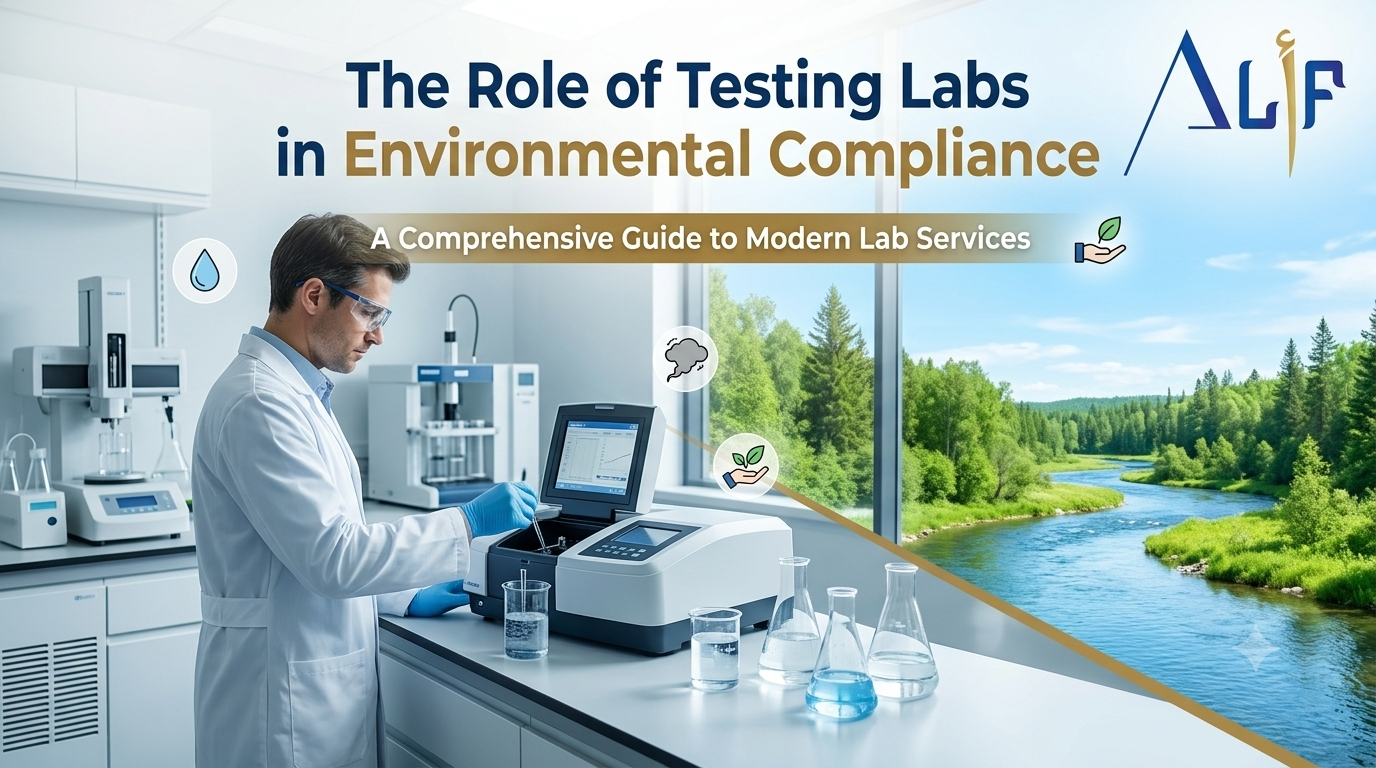
Featured image idea: Environmental testing professionals collecting samples or performing air/emissions measurements at an industrial facility.
Publishing note: Verify the latest Oman-specific environmental requirements, applicable testing standards, permit conditions, and laboratory/service scope before publishing regulatory-specific claims.

Leave a Reply