

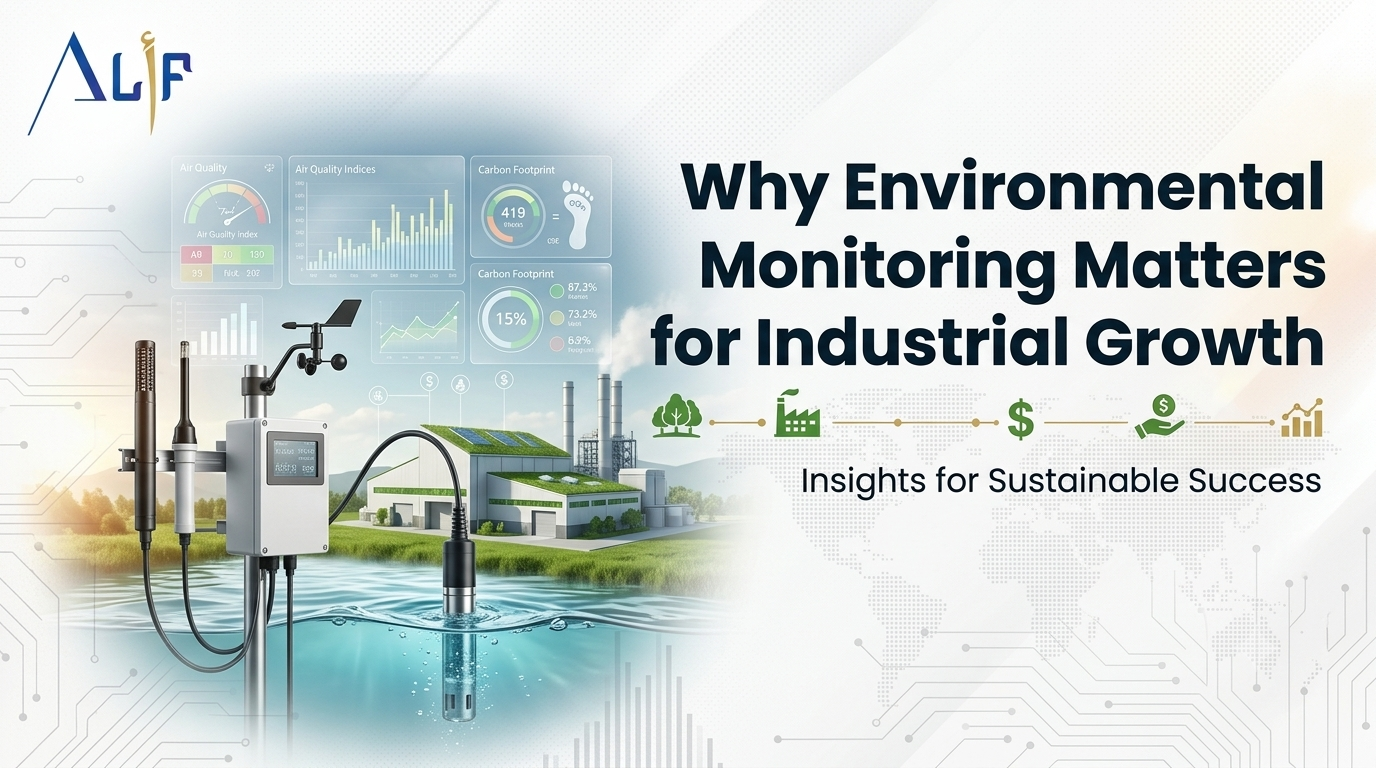
Industrial development is an important part of economic growth. Manufacturing facilities, processing plants, energy projects, construction activities, and other industries create jobs, support supply chains, and contribute to business development.
At the same time, industrial operations can affect the surrounding environment through emissions, wastewater, waste generation, noise, and other activities.
This is where environmental monitoring becomes important.
Environmental monitoring allows businesses to collect information about environmental conditions and understand how their operations may be affecting the surrounding environment. It can also help companies identify potential issues, maintain records, support applicable environmental requirements, and make better operational decisions.
For businesses operating in Oman, a structured approach to environmental monitoring Oman can support responsible industrial development while helping facilities manage environmental risks.
What Is Environmental Monitoring?
Environmental monitoring is the systematic process of observing, measuring, and recording environmental conditions.
Depending on the type of facility and its activities, monitoring may cover several areas, including:
- Air quality
- Industrial emissions
- Water quality
- Wastewater
- Soil conditions
- Noise levels
- Dust and particulate matter
- Waste management
- Other environmental parameters
The exact monitoring requirements vary depending on the industry, project, location, environmental approvals, permit conditions, and applicable requirements.
Monitoring provides businesses with measurable information instead of relying only on visual observations or assumptions.
Why Is Environmental Monitoring Important for Industrial Facilities?
Industrial operations can change over time. Production volumes may increase, equipment may be modified, fuels may change, and new processes may be introduced.
These changes can affect environmental performance.
Regular monitoring helps businesses understand these changes and take appropriate action when necessary.
1. Supports Environmental Compliance
One of the main reasons businesses conduct environmental monitoring is to support their environmental responsibilities.
Industrial facilities may have specific requirements relating to:
- Emissions
- Air quality
- Wastewater
- Waste management
- Environmental reporting
- Monitoring frequency
- Environmental records
Monitoring provides technical information that can support the company’s environmental management and applicable compliance activities.
Businesses should always refer to their current permits and applicable requirements to determine what must be monitored and how frequently.
2. Helps Identify Pollution Sources
Industrial pollution may come from different sources within a facility.
For example, emissions may originate from:
- Boilers
- Furnaces
- Generators
- Production equipment
- Industrial stacks
- Material handling
- Storage systems
- Other process equipment
Industrial emissions monitoring can help identify changes in emission levels and provide information for investigating potential problems.
Similarly, water and wastewater testing can help businesses understand the quality of water associated with their industrial processes.
3. Supports Better Operational Decisions
Environmental data can provide useful information for facility managers.
For example, if monitoring shows a significant change in emissions, management can investigate whether the change is related to:
- Equipment condition
- Fuel quality
- Production levels
- Process changes
- Maintenance activities
- Pollution control equipment
This allows businesses to make decisions based on measured information rather than assumptions.
4. Helps Detect Problems Earlier
Small environmental issues can become more difficult to manage if they are not identified early.
Regular monitoring creates a history of environmental performance.
When results are compared over time, businesses may be able to identify unusual changes or trends.
For example:
Normal results → gradual increase → unusual result → investigation
This type of monitoring approach can help facility managers investigate potential causes before the problem becomes more significant.
5. Supports Pollution Control Measures
Many industrial facilities use pollution control systems to reduce emissions or manage environmental impacts.
These may include:
- Filters
- Dust collectors
- Scrubbers
- Exhaust systems
- Wastewater treatment systems
- Oil separators
- Other pollution control equipment
Environmental testing can provide information that helps businesses review whether these systems are performing as expected.
Monitoring does not replace equipment inspection or maintenance, but it can provide useful technical information alongside those activities.
Key Areas of Environmental Monitoring
The environmental monitoring requirements of an industrial facility depend on its activities.
Several areas are commonly considered.
Air Quality Monitoring
Air quality monitoring involves measuring selected pollutants or environmental conditions in ambient air.
Depending on the project, monitoring may consider parameters such as:
- Particulate matter
- Dust
- Gases
- Other relevant air pollutants
Air quality monitoring can help businesses understand environmental conditions around their operations.
It may be particularly relevant for industrial facilities located near residential areas, sensitive locations, or other businesses.
Industrial Emissions Monitoring
Industrial emissions monitoring focuses on pollutants released from specific emission sources.
Testing may involve equipment such as:
- Boilers
- Generators
- Furnaces
- Industrial stacks
- Processing equipment
The parameters measured depend on the process and applicable requirements.
Possible parameters may include particulate matter, nitrogen oxides, sulfur oxides, carbon monoxide, and other relevant pollutants.
Water Quality Monitoring
Water quality monitoring helps businesses understand the characteristics of water associated with their operations.
Depending on the facility, this may involve:
- Process water
- Surface water
- Groundwater
- Industrial wastewater
- Other relevant water sources
The parameters tested should be selected according to the purpose of the monitoring and applicable requirements.
Wastewater Monitoring
Facilities that generate industrial wastewater may need to monitor wastewater characteristics before discharge or treatment.
Monitoring can help identify changes in wastewater quality and provide information about treatment system performance.
Relevant testing parameters depend on the industrial process and discharge requirements.
Noise Monitoring
Industrial equipment, machinery, generators, vehicles, and construction activities can produce noise.
Noise monitoring can help businesses understand sound levels in relevant areas and investigate potential concerns.
The monitoring approach should consider the location, operating conditions, measurement method, and applicable requirements.
7 Ways Environmental Monitoring Supports Industrial Growth
Environmental monitoring is not simply an environmental activity. It can also support better business management.
1. Helps Businesses Manage Environmental Risks
Every industrial facility has environmental risks associated with its activities.
Monitoring provides information that can help businesses identify and manage these risks.
For example, emissions monitoring can identify changes in air emissions, while wastewater testing can identify changes in water quality.
2. Supports Long-Term Planning
Environmental data collected over months or years can help businesses identify trends.
This information can support decisions related to:
- Equipment upgrades
- Process improvements
- Pollution control systems
- Maintenance planning
- Environmental management programs
Instead of making decisions based only on a single test result, businesses can examine historical information.
3. Helps Improve Resource Efficiency
Environmental monitoring can sometimes highlight opportunities to improve the efficiency of industrial processes.
For example, changes in emissions or wastewater characteristics may encourage businesses to investigate fuel use, equipment efficiency, production processes, or waste generation.
Environmental improvement and operational efficiency can sometimes support each other.
4. Supports Environmental Audits
A facility with organized monitoring records can provide useful information during an environmental audit.
Records may include:
- Testing reports
- Monitoring results
- Sampling information
- Equipment records
- Corrective action documents
- Environmental inspection reports
Good documentation makes it easier to review environmental performance.
5. Supports Environmental Reporting
Businesses may need to maintain or submit environmental information depending on their applicable obligations.
Monitoring provides the underlying technical information that may be used for environmental records and reports.
The information should be reviewed before reporting to ensure that the data is accurate and appropriate for its intended purpose.
6. Helps Manage Changes in Industrial Operations
Industrial facilities do not always operate under identical conditions.
Changes may include:
- New machinery
- Increased production
- New raw materials
- Fuel changes
- Process modifications
- Equipment upgrades
- Expansion of the facility
These changes may affect environmental performance.
Monitoring can help businesses assess environmental conditions before and after significant operational changes where appropriate.
7. Supports Responsible Industrial Development
Responsible industrial growth requires businesses to consider both operational and environmental performance.
A structured monitoring program can help companies understand their environmental impact and identify areas where improvements may be appropriate.
Environmental Monitoring in Oman’s Industrial Sector
Oman has a diverse industrial sector covering manufacturing, energy, logistics, construction, processing, and other activities.
Different industrial activities create different environmental considerations.
For this reason, there is no single monitoring program that is suitable for every business.
A facility should consider factors such as:
- Type of industry
- Production process
- Emission sources
- Raw materials
- Fuel used
- Waste generated
- Water usage
- Wastewater generation
- Facility location
- Environmental approvals
- Applicable permit conditions
Businesses should use the requirements applicable to their specific project when developing an environmental monitoring program.
How to Build an Environmental Monitoring Program
A structured monitoring program can make environmental management more effective.
Step 1: Identify Environmental Aspects
Start by identifying activities that may affect the environment.
These may include:
- Air emissions
- Wastewater
- Waste
- Noise
- Dust
- Chemical storage
- Fuel storage
- Other industrial activities
Step 2: Identify Relevant Parameters
Determine which environmental parameters need to be measured.
For example, an industrial facility with combustion equipment may need to monitor selected emission parameters.
Step 3: Establish Monitoring Locations
Choose suitable monitoring locations based on the purpose of the assessment and applicable technical requirements.
Sampling locations should allow representative measurements where required.
Step 4: Establish a Monitoring Schedule
Develop a schedule based on:
- Permit conditions
- Applicable regulations
- Industry requirements
- Previous results
- Operational changes
- Environmental risks
The schedule should be reviewed when facility operations change.
Step 5: Conduct Testing and Measurement
Use suitable equipment, procedures, and qualified personnel for the required monitoring activities.
Where laboratory analysis is required, samples should be handled and analyzed using appropriate procedures.
Step 6: Record and Review Results
Maintain organized records of monitoring activities.
Results should be reviewed to identify:
- Unusual values
- Significant changes
- Trends
- Potential equipment issues
- Possible environmental risks
Step 7: Take Corrective Action Where Required
If monitoring identifies a potential problem, investigate the cause and determine whether corrective action is necessary.
Actions may involve:
- Equipment maintenance
- Process adjustments
- Pollution control improvements
- Additional testing
- Employee training
- Further environmental assessment
Common Challenges in Environmental Monitoring
Businesses may face several challenges when developing an environmental monitoring program.
Inconsistent Monitoring
Testing conducted irregularly can make it difficult to identify meaningful trends.
Poor Recordkeeping
Missing dates, locations, testing methods, or supporting documents can reduce the usefulness of environmental data.
Choosing the Wrong Parameters
Testing parameters should be selected based on the facility’s actual activities and monitoring objectives.
Poor Sampling Practices
Incorrect sampling locations or procedures can affect the quality of the results.
Ignoring Changes in Results
A significant change should be reviewed rather than simply filed away without investigation.
Treating Monitoring as a One-Time Activity
Environmental monitoring is most useful when it forms part of an ongoing environmental management process.
How Environmental Testing Supports Environmental Monitoring
Environmental testing Oman services can provide technical measurements that support a facility’s monitoring program.
Depending on the project, testing may involve:
- Air quality testing
- Industrial emissions testing
- Water quality testing
- Wastewater analysis
- Noise measurements
- Soil testing
- Other environmental measurements
The appropriate testing method depends on the parameter being measured, the purpose of the assessment, and applicable requirements.
Testing results can then be reviewed alongside operational information to provide a better understanding of environmental performance.
Choosing an Environmental Testing Provider
When selecting an environmental testing provider, businesses should consider several factors.
Technical Experience
Check whether the provider has relevant experience with the facility’s industry and testing requirements.
Suitable Testing Methods
The provider should be able to use appropriate methods for the required environmental parameters.
Qualified Personnel
Environmental sampling and testing should be performed by appropriately trained and competent personnel.
Equipment and Quality Controls
Ask about the instruments, laboratory processes, calibration, and quality control procedures relevant to the testing.
Clear Reporting
Testing reports should clearly identify the testing location, date, parameters, methods, results, and relevant observations.
Relevant Credentials
Where a specific accreditation, authorization, or approval is required, businesses should verify that the provider holds the appropriate current credentials for the specific service.
How Alifoman Can Support Environmental Monitoring
Alifoman provides environmental and technical testing support for businesses managing industrial and environmental requirements.
For businesses developing or maintaining an environmental monitoring program, suitable testing can provide useful information about environmental conditions and industrial processes.
Depending on the project requirements and Alifoman’s available services, support may include:
- Environmental testing
- Industrial emissions monitoring
- Air quality-related testing
- Environmental sampling
- Technical testing reports
- Support for environmental monitoring activities
The exact testing scope, methods, availability, and applicable credentials should be confirmed with Alifoman before arranging a project.
Environmental Monitoring Checklist
Businesses can use the following checklist when reviewing their environmental monitoring program:
- Identify environmental aspects of the facility.
- Identify relevant emission and pollution sources.
- Determine applicable monitoring parameters.
- Review current environmental permits and approvals.
- Establish suitable monitoring locations.
- Create a testing and monitoring schedule.
- Use suitable testing methods and equipment.
- Maintain calibration and equipment records where applicable.
- Record operating conditions during relevant testing.
- Maintain environmental test reports.
- Compare current results with previous results.
- Investigate unusual changes.
- Document corrective actions.
- Review the monitoring program when operations change.
Frequently Asked Questions
1. What is environmental monitoring?
Environmental monitoring is the process of measuring and recording environmental conditions such as air quality, emissions, water quality, wastewater, noise, and other relevant parameters.
2. Why is environmental monitoring important for industries?
It helps businesses understand environmental conditions, identify potential problems, support applicable compliance activities, and make better-informed operational decisions.
3. What does environmental monitoring include?
It can include air quality monitoring, industrial emissions testing, water and wastewater testing, noise monitoring, soil testing, and other measurements depending on the facility.
4. How often should environmental monitoring be conducted?
There is no single frequency for every industrial facility. The appropriate schedule depends on the facility’s environmental permit, applicable requirements, industry, environmental risks, and operational conditions.
5. Can environmental monitoring help reduce industrial pollution?
Monitoring can identify changes in environmental conditions and provide information that helps businesses investigate potential pollution sources and consider appropriate corrective measures.
6. Is environmental monitoring required for every industrial facility?
Requirements vary according to the type of facility, activities, location, environmental approvals, permit conditions, and applicable regulations. Businesses should determine the requirements relevant to their specific operations.
7. How does environmental testing support monitoring?
Environmental testing provides measurements and analytical results for selected environmental parameters. These results can help businesses understand and document environmental conditions.
Conclusion
Environmental monitoring is an important part of modern industrial management. It provides businesses with measurable information about emissions, air quality, water, wastewater, noise, and other environmental conditions.
For industrial facilities in Oman, a structured monitoring program can help businesses maintain environmental records, identify potential problems, support applicable compliance activities, and make informed operational decisions.
The most effective approach is not to treat monitoring as a one-time activity. Instead, businesses can integrate regular testing, recordkeeping, equipment inspections, and corrective actions into their wider environmental management practices.
For companies seeking environmental monitoring Oman services, selecting a suitable technical testing provider can help establish reliable environmental information and support responsible industrial growth.

Leave a Reply